
The Turkish city of Istanbul holds a great many water cisterns, built in the sixth century AD,
and they lie beneath the city. The sunken palace, or Basilica Cistern, is the largest cistern in Istanbul,
and it sits in the Sultanahmet district of Istanbul, close to the Hagia Sophia museum.
In Turkish the cistern's name is written "Yerebatan Sarnıcı"
The sunken palace in Istanbul is an ancient water reservoir that later became one of the city's leading attractions
drawing large numbers of tourists every year. It is the largest of the giant water cisterns in Türkiye,
built by the Byzantines in the sixth century AD, and it is also among the oldest palaces in Istanbul.
The sunken palace is made up of 336 columns set out in long rows, and it also holds
a number of bridges that make it easier for visitors to move from one end to the other.
The sound of trickling water inside the palace never stops, as it contains a large pool
a metre and a half deep that is home to fish of a kind known as “Karya”.
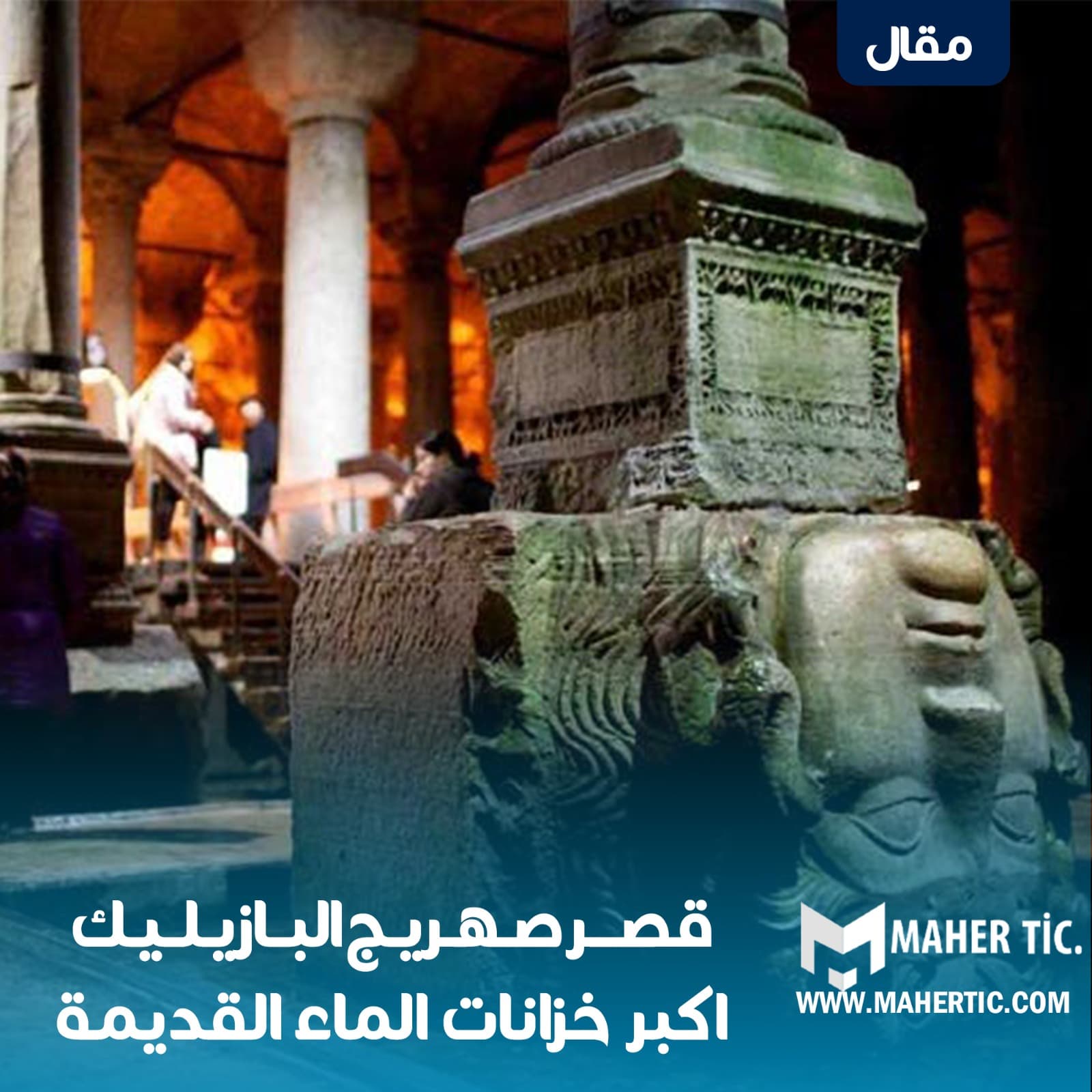
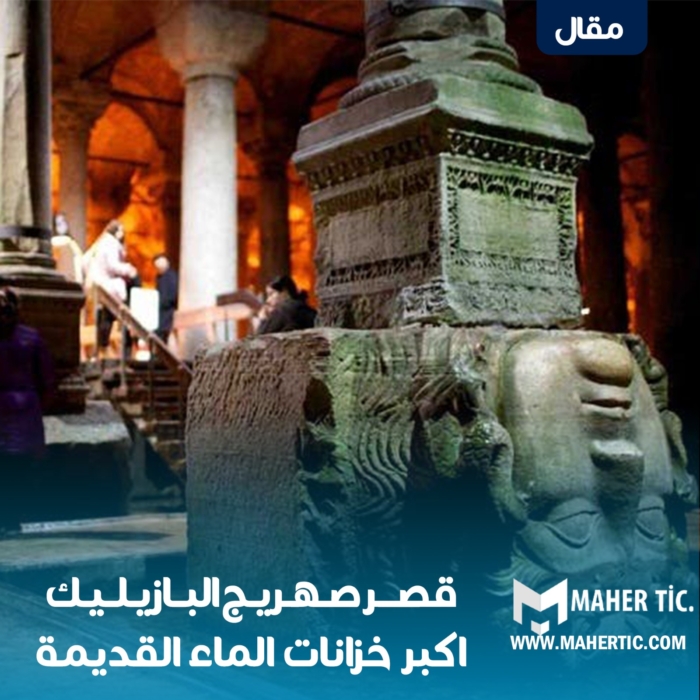
The Medusa head and the wishing column are among the best-known features inside the sunken palace in Istanbul
and many tourists come to the palace to visit the wishing column, believing it will grant their wishes.
The sunken palace in Istanbul, or “the Basilica Cistern,” is one of hundreds of historic landmarks
that the city of Istanbul enjoys, alongside its museums, mosques, churches
and heritage buildings, which draw tourists to Türkiye from every corner of the earth